


Home
UNESCO Chair
History
Officially established in March 2019, the UNESCO Chair on Intangible Cultural Heritage and Comparative Law is hosted by the Department of Law and Digital Society at UnitelmaSapienza University of Rome. Following the first four-year period under the agreement with the UNITWIN/UNESCO Chairs Programme (2019–2022), the Chair was renewed for a further four years (2023–2026).
Since its establishment, the Chair has carried out a wide range of research and training activities in order to pursue the objectives set out in the Founding Agreement signed with UNESCO. In line with the Guidelines and Procedures of the UNITWIN/UNESCO Chairs Programme (March 2022), and in order to continue its activities beyond the initial four-year cycle, the Chair submitted a renewal request to UNESCO (by November 2022). This request provided a complete account of the activities and initiatives undertaken during the period, together with a programme for their continuation and a proposal for new projects and objectives reflecting UNESCO priorities, including the bioeconomy and sustainable development, tourism as a tool for enhancing heritage, and the dignity of work.
Since 2023, the Chair has been formally a member of the ReCUI Network, the Network of Italian UNESCO Chairs.
This is the only UNESCO Chair in Italy dedicated to intangible cultural heritage, and it is also the only UNESCO Chair hosted by an online university.
Research Focus
The UNESCO Chair on Intangible Cultural Heritage and Comparative Law operates at the intersection of comparative public law, international law, and cultural anthropology. It represents a further step in a ten-year process through which the University, together with its professors and experts, has developed sustained research and expertise around the 2003 UNESCO Convention for the Safeguarding of the Intangible Cultural Heritage.
Adopting a multidisciplinary approach, the Chair studies intangible cultural heritage (ICH) through comparative analyses that focus in particular on Mediterranean and Latin American countries. Its work examines key legal instruments and significant examples of legal protection for ICH that may be adapted and replicated in other national contexts. The overarching goal is to foster “local”, “regional”, and “global” awareness of ICH among academic communities and public institutions, while consolidating a virtuous dynamic between the Global North and the Global South and encouraging the exchange of good practices in support of sustainable development goals.
Since 2023, the Chair has been formally a member of the ReCUI Network, the Network of Italian UNESCO Chairs.
The Team
What is a UNESCO Chair
The United Nations Educational, Scientific and Cultural Organization (UNESCO) launched the UNITWIN/UNESCO Chairs Programme in 1992. The Programme supports multi-year teaching and research initiatives on specific themes and promotes international inter-university collaboration and networking. Its purpose is to strengthen institutional capacities through knowledge-sharing and collaborative work.
Through the Internet, universities can pool human and material resources to address pressing challenges and contribute to societal development. Networks of Chairs often provide experts and mediators capable of bridging academia, civil society, local communities, research, and policy. In this way, they can support policy makers, launch new educational initiatives, generate innovation through research, and enrich existing university programmes while promoting cultural diversity.
A UNESCO Chair is established for a four-year period through an agreement signed by the Director-General of UNESCO and the Rector of the university or research institute. The UNITWIN Cooperation Programme, by contrast, establishes a partnership between UNESCO and a network of universities or research institutes (three to ten) located in different countries. This partnership is formalized through an agreement between UNESCO and the network, which sets out the objectives of the collaboration and expected results, and describes the operating arrangements and support mechanisms for the network.
The UNITWIN/UNESCO Chairs Programme is implemented as a priority in areas related to UNESCO’s fields of competence, including education, the natural and social sciences, culture, and communication.
Chair Holder
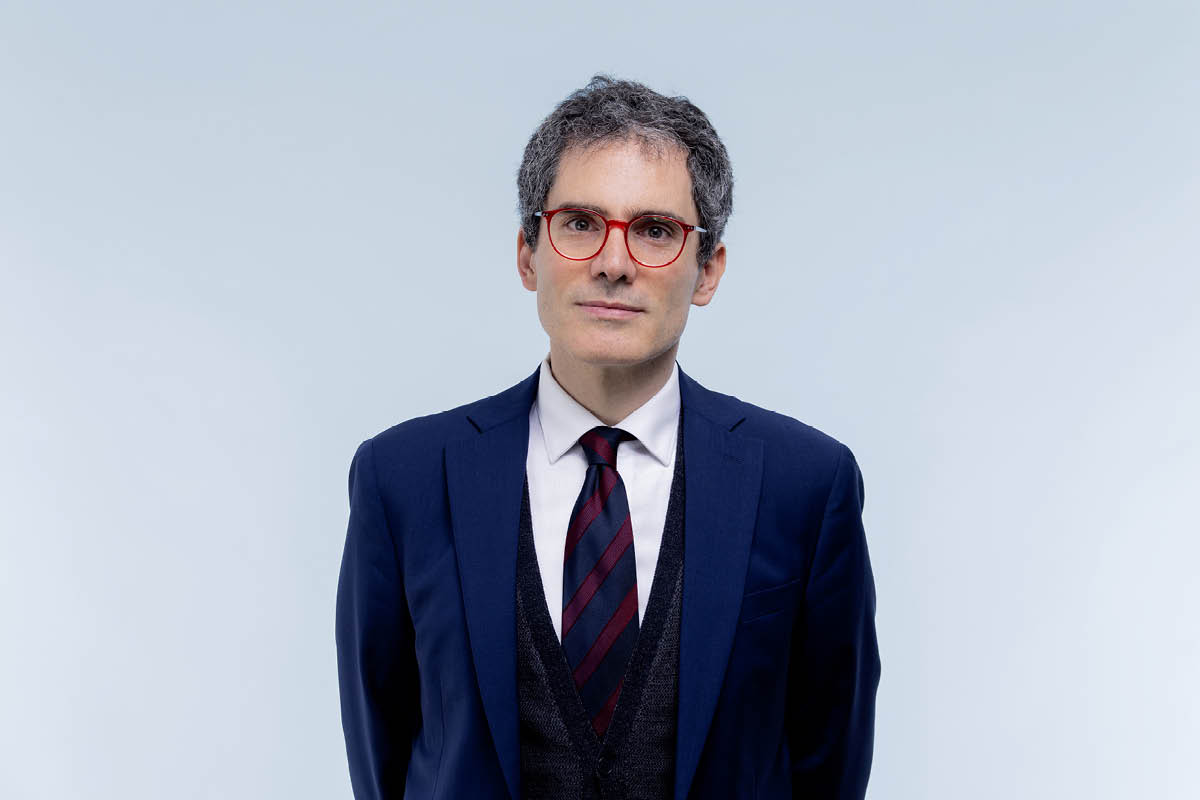
Prof. Pier Luigi Petrillo
Full Professor of Comparative Public Law (IUS/21) and Comparative Cultural Heritage Law at Università degli Studi di Roma Unitelma Sapienza, where he also serves as Director of the School of Advanced Studies in Cultures, Politics and Democracy (Cu.Po.De.). He has more than fifteen years of experience on UNESCO-related matters and is a member of the Global Facilitator Network of the 2003 UNESCO Convention for the Safeguarding of the Intangible Cultural Heritage. He currently chairs the Italian National Technical Committee “Uomo e Biosfera” for the UNESCO Man and the Biosphere (MAB) Programme.
In 2022, he served as Past-President of UNESCO’s Body of World Experts on Intangible Cultural Heritage, becoming the first and, to date, the only European expert to have held this role. He has contributed as a scientific author to numerous UNESCO nomination dossiers, including “Italian cooking, between sustainability and biocultural diversity”, “The Mediterranean diet”, and “Transhumance, the seasonal droving of livestock”, among others.
His publications include The Legal Protection of Intangible Cultural Heritage. A Comparative Perspective (Springer, 2018), a collective volume featuring contributions from scholars based in Italy, Spain, Brazil, Mexico, Cyprus, Jordan, Japan, and Korea, as well as Intangible Cultural Heritage Law in the Digital Era: Living Heritage, Civil Society, and Sustainable Development (Routledge, 2026). He is also a co-founder of the Global Universities Alliance for Cultural Rights, a global, open-source network of universities engaged in cultural rights.
Research Group

Chiara D’Alessandro

Giada Tortora
Scientific Collaborator. Coordinator of community relations
Giada Tortora is a scientific collaborator at the School of Advanced Studies on Cultures, Politics, and Democracy at UnitelmaSapienza, coordinator of community relations at the UNESCO Chair on Intangible Cultural Heritage and Comparative Law and PhD candidate in Peace Studies (Restorative Justice, Transitional Justice, and Nonviolent Conflict Transformation) at Sapienza University of Rome. She holds a Master’s degree in Law, followed by a specialisation in cultural heritage management. Her research covers both the fields of intangible cultural heritage and that of lobbying and public participation. She is the author of a contribution to the Italian law journal federalismi.it entitled “The Regulation of Lobbying in Greece: Comparative Profiles” and has served as a research collaborator within the National Research Project “Lobbies and Democracy: How the Regulation (or Lack of Regulation) of Interest Groups Affects the Implementation of Social, Cultural, Environmental, and Digital Rights. An Evidence-Based Analysis of Comparative Law” (2022–2026). She also has extensive experience as an academic tutor in the disciplinary area of European and Comparative Law at the University of Rome UnitelmaSapienza.

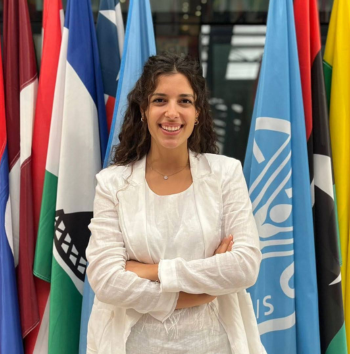
Sara Di Luca
Research Fellow. International Relations and Outreach Coordinator.
Sara Di Luca is a research fellow and youth advocate for cultural rights. As International Relations and Outreach Coordinator of the UNESCO Chair, she oversees national and international partnerships, identifies strategic affinities, and develops new collaborations and project opportunities. In this capacity, she has contributed to the design of training programmes for international organisations and developed non-formal education workshops aimed at raising awareness of intangible cultural heritage. She also serves as Operational Manager of the Global Universities Alliance for Cultural Rights, coordinating a worldwide network of universities to advance cultural rights through research, education, and dissemination.
She holds a double Master’s degree in European Policies from LUISS Guido Carli University and King’s College London, specialising in Cultural Heritage Policies and Management. Her Master’s thesis examined the impact of climate change on the non-economic resilience of the Sámi people, with a focus on how environmental change affects the transmission of traditional knowledge and the resilience of Indigenous communities.
Her professional experience includes roles at the Italian Ministry of Culture, the European Commission (DG EAC), and the Italian Cultural Institute in Santiago de Chile. She was also elected as a Youth Forum Councillor in her hometown for two mandates, promoting youth participation in cultural decision-making processes.

Thiago Rafael Burckhart
Postdoctoral Research Fellow
Dr. Thiago Burckhart is a Postdoctoral Research Fellow in Comparative Public Law at the UNESCO Chair on Intangible Cultural Heritage and Comparative Law, University of Rome UnitelmaSapienza. His research focuses on intangible cultural heritage law, comparative constitutional law, cultural rights, Indigenous peoples’ rights, environmental constitutionalism and cultural diversity. He has published extensively on the legal protection of intangible cultural heritage, community participation, epistemic justice, interculturality and sustainability, with a particular focus on comparative and Latin American perspectives.
Scientific Committee
Prof.ssa Elisabetta Moro
President
Hon. Massimo Bray
Prof. Tullio Scovazzi
Prof.ssa Vania Aieta Siciliano
Hani Hayajineh
Francisco Humberto Cunha Filho
Janet Blake
Barbra Babweteera
Steering Committee
Prof. Piergiuseppe Morone
Prof. Valerio Maio
Prof. Giulio Maggiore
UnitelmaSapienza. A centenary history at the service of your future.


QUICK ACCESS
Contact Us
Enrolment
International Relations
Erasmus+
Privacy Policy